Loading...
Thimphu
Thimphu Evening Walk
ReflectionConnectionJoyCalm
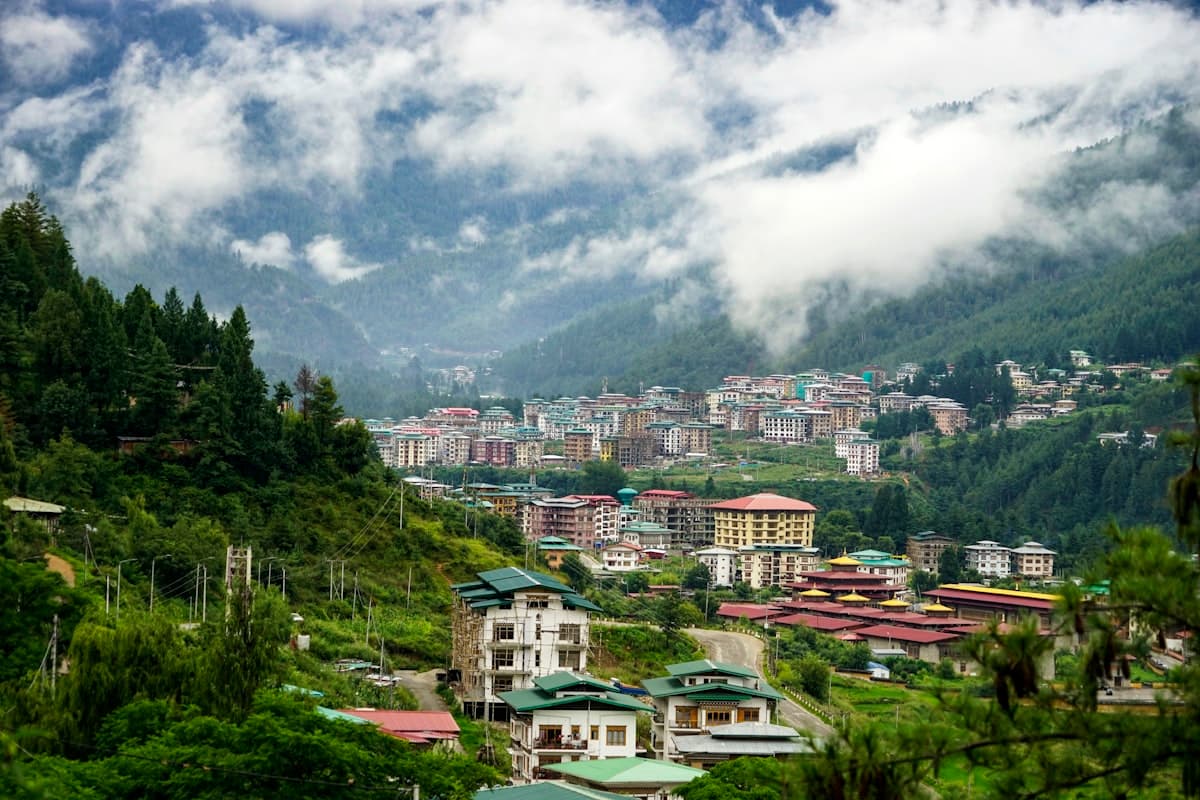
Thimphu is not what you expect a capital city to feel like. It is the only national capital in the world without a single traffic light. Policemen in white gloves direct traffic from ornate booths at the main intersection. The pace is human-scaled.
Do not come here for monuments. Come here for the evening. Come here for the hour after the dzongs close and the mountains turn blue and the little bookshops on the main street stay lit. Come here for butter tea in a cafe where the owner is reading a newspaper and the radio is playing Bhutanese pop music and nobody is performing for tourists.
Thimphu is your recovery layer. After Tiger's Nest breaks you open, after Phobjikha shows you silence, after Dochula teaches you uncertainty — Thimphu gives you a warm room and a cup of something hot and the quiet pleasure of being in a small city that still functions at a walking pace.
The Memorial Chorten in the centre of town is a place where elderly Bhutanese come every day to walk clockwise, spinning prayer wheels, murmuring mantras, meeting friends. It is not a tourist attraction. It is a neighbourhood ritual. Sitting nearby and watching is one of the most genuinely warm experiences in Bhutan — not dramatic, not Instagrammable, just human.
At dusk, walk the main street. The shops sell everything from traditional textiles to bootleg DVDs. Monks in maroon robes buy groceries alongside teenagers in sneakers. The mountains are always visible at the end of every street. This is a city that has not yet lost its relationship with the landscape around it.
Sensory Profile
Noise Level
Crowd Level
Brightnessmoderate (urban but not brightly lit; warm shopfront glow at evening)
Temperaturecool (2,320m altitude). Cold in winter evenings.
SmellsStreet food (momos, ema datshi), incense from Memorial Chorten, diesel from occasional traffic, warm bread, butter tea
Unexpected SoundsTraffic (moderate but no horns enforced). Stray dogs barking at night. Occasional monastery horns from Tashichho Dzong. Music from shops.
Walking Difficultyeasy
Social ExpectationsNormal urban behaviour. More relaxed than monastery or dzong environments.
Quiet SpacesYes
Best Time (Low Stimulation)Early morning (before 8am, the streets are nearly empty). Late evening (after 7pm, most shops close and the city quiets dramatically).
Sensory data informed by clinical neurodevelopmental expertise.
Mindfulness Activity
The Evening Walk
Four prompts for a purposeless evening in the world's only capital without a traffic light.
Grounding and sensory. A way in.
- 1
The Walk
The main street at dusk. Monks buying groceries. Teenagers in sneakers. Mountains at the end of every road.
Walking the main street of Thimphu between 5pm and 6pm. No destination. No phone.
Walk for five minutes and notice what is ordinary here that would be extraordinary at home. A policeman in white gloves directing traffic from an ornate booth. Monks carrying shopping bags. Dogs sleeping on warm pavement. Which ordinary detail surprises you most?
- 2
The Counting
A game with a point. Monks, dogs, and smiles — Thimphu's three currencies.
During the walk. Count three things: monks, dogs, and people smiling.
Count the monks you pass. Count the dogs. Count the people who are smiling. After ten minutes, which number is highest? Which counting made you look most carefully at the people around you?
- 3
The Window
A cafe, a cup of tea, and ten minutes of watching the world pass without participating in it.
In a cafe. Sit near the window. Order tea. Watch.
For ten minutes, watch the street without doing anything else. Who passes? What are they carrying? Where do they look? Notice one person who pauses — what made them stop? Notice one person who is walking faster than everyone else. Where might they be going?
- 4
The Shop
One shop you would not normally enter. A small act of crossing a boundary you set for yourself without knowing it.
On the walk back. Enter one shop you would not normally choose.
Look around the shop for two minutes. What is sold here? What is the most unusual item? Pick something up and hold it. Ask the shopkeeper one question about it. What did you learn that you did not expect?
For Curious Minds
Thimphu is a small city built for wandering — every side street holds a discovery, every cafe has a story, and the blend of traditional architecture with modern life creates a constant stream of gentle novelty.
- •Hidden Cafe Quest: Find three cafes that are not on the main street. Rate each one for warmth, quiet, quality of tea, and view.
- •Momo Census: How many momo stalls can you find? Which one has the longest queue? (That is the best one.)
- •Architecture Walk: Bhutanese law requires all buildings to incorporate traditional architectural elements. Walk three blocks and photograph the most creative interpretations of this rule. Where does modern Bhutan push against tradition?
- •Bookshop Dive: DSB Books on the main street is the best bookshop in Bhutan. Find a book about Bhutanese mythology you have never heard of. Read the first page standing up. If it grips you, buy it.
- •Night Sky: Walk to the edge of town after dark. The mountains are black silhouettes. The stars are extraordinary at 2,300m altitude.
Regulation Suggestion
If the city feels too stimulating after rural Bhutan, retreat to the Memorial Chorten. The rhythmic circumambulation of the elderly locals is one of the most regulating sights in the country — consistent, slow, warm.
What people felt here
“I found a bookshop on a side street and spent two hours reading about Bhutanese mythology. The owner brought me tea without asking.”
📍 Written Here
JoyConnection
“Thimphu at dusk feels like a city that has not yet forgotten how to be quiet.”
🕐 Written From Memory
CalmReflection